
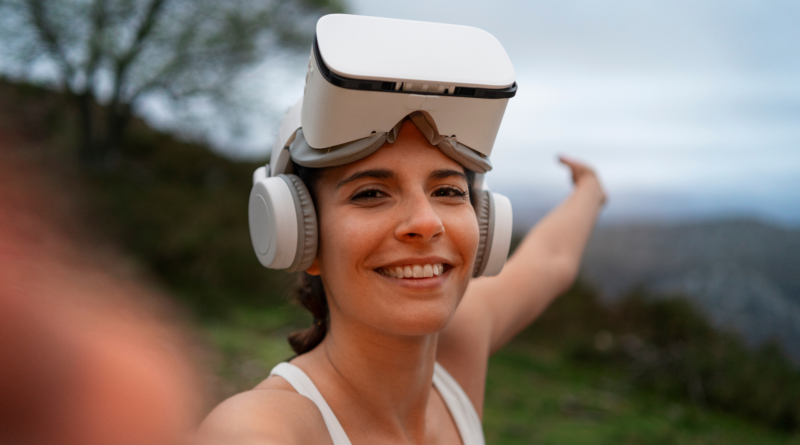
The Rise of Immersive VR, AR and QR Tech in Travel
There was a time when travel started with a Google search and ended with a printed boarding pass. Today, it begins somewhere entirely different which inside a headset, through a phone screen or with a simple scan of a QR code. Travel is no longer just something you do. It’s something you experience before you even leave home. Welcome to the era of immersive travel, where virtual reality (VR), augmented reality (AR, and QR powered technology are quietly reshaping how we plan, book, and experience journeys across Africa and beyond.
Preview Before You Pack
Imagine standing in your living room, but somehow you’re also walking through a luxury safari lodge in the Serengeti. You can look around, step closer to the deck, and almost feel the stillness of the landscape. That’s VR and it’s no longer futuristic.
Travel companies are increasingly using virtual tours to give travellers a full preview of destinations, hotels, and experiences before booking. These aren’t just static images anymore. They’re interactive, layered, and designed to build confidence. In fact, immersive tech is transforming how people make decisions, allowing travellers to “test” a destination before committing to it. And it’s working. As digital expectations grow, travellers want more than brochures… They want certainty, clarity, and connection. VR delivers exactly that.
Reality, But Smarter
While VR transports you elsewhere, AR enhances what’s already in front of you.
Picture this: you’re standing in front of a historical site in Zanzibar. You lift your phone, and suddenly, the ruins rebuild themselves on your screen. Stories appear. Names, timelines, even voices. What you’re seeing isn’t just a place, it’s context layered over reality. That’s the power of AR. It overlays digital information onto the physical world, turning everyday sightseeing into something interactive and deeply informative.
Across the travel industry, AR is being used for navigation, translation, storytelling, and even personalised recommendations. It bridges the gap between what you see and what you understand — and in a continent as rich in culture and history as Africa, that’s a game changer.
The QR Code Comeback
Then there’s the quiet hero of modern travel: the QR code. Once seen as a pandemic-era necessity, QR technology has evolved into a seamless gateway between the physical and digital travel experience. Scan a code at a hotel, and you’re checking in. Scan one at a museum, and you’re unlocking audio guides, videos, or behind-the-scenes content. Scan one at a restaurant, and suddenly the menu tells a story, not just ingredients, but origins.
It’s simple, fast, and increasingly expected. And in regions where mobile-first behaviour dominates, QR technology has become one of the most effective tools for delivering information without friction.
Why This Matters for Africa
Africa is uniquely positioned to benefit from this shift. Unlike more saturated markets, many destinations across the continent are still defining how they present themselves digitally. That creates an opportunity which is not to catch up, but to leap forward. South African businesses, for example, are already exploring VR previews to attract international travellers, giving them a “taste” of experiences before they book.
At the same time, immersive technology allows destinations to tell richer, more authentic stories. Instead of simplifying culture for mass tourism, AR and VR can deepen understanding… preserving heritage while making it accessible to a global audience.
It’s Not Just a Trend — It’s a Shift
The numbers tell their own story. The VR tourism market is projected to grow rapidly over the next few years, alongside even faster growth in AR applications within travel.
But beyond the numbers, the real shift is behavioural. Travellers no longer want passive experiences. They want interaction. Personalisation. Control. They want to feel something before they book and understand something when they arrive.
The Human Side of Tech
Here’s the irony: the more advanced travel technology becomes, the more human travel feels. By removing uncertainty, immersive tech allows travellers to be more present. By adding context, it creates deeper appreciation. By simplifying logistics, it frees up time for what actually matters and that is connection, discovery and experience.
The future of travel isn’t just digital. It’s emotional, intuitive and immersive. And whether it starts with a VR headset, an AR overlay or a simple QR scan, one thing is clear:
Travel is no longer just about where you go. It’s about how deeply you experience it which is before, during and long after the journey ends.
For more industry related news, click here.


