
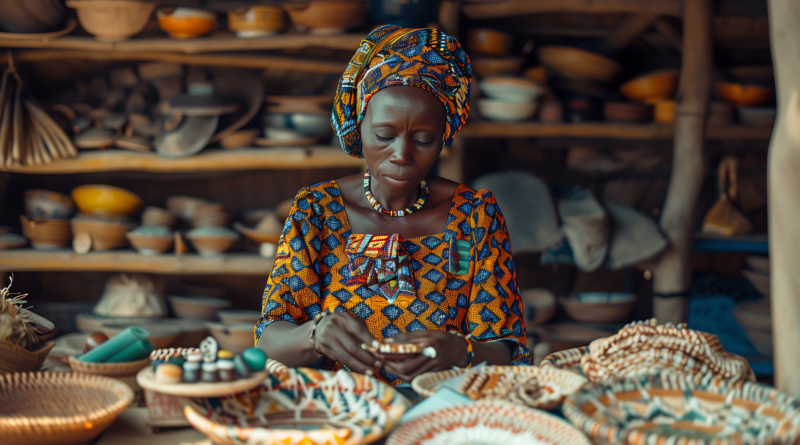
Traditional Arts and Crafts: What to Expect Throughout Africa
Growing up in Namibia, I learnt early on that across Africa, art is not confined to galleries – it lives in village workshops, roadside stalls, and lively open-air markets. For travellers, traditional crafts offer a window into the continent’s stories, symbols, and centuries-old techniques passed down through generations. From carved wildlife in Namibia to handwoven textiles in West Africa, Africa’s creative heritage is as diverse as its landscapes.
Woodcarving
Woodcarving is one of the continent’s most iconic art forms. In Namibia, artisans carve the Big Five from mopane and kiaat, shaping wildlife with remarkable detail. Travelling east reveals the celebrated Makonde carvers of Tanzania and Kenya, whose expressive and often mythical human forms showcase an extraordinary level of skill. In Ghana, carved stools, ceremonial masks, and fertility dolls continue to reflect deep cultural symbolism and artistry.
Textiles
Africa’s textile traditions are both beautiful and meaningful. Ghana’s vibrant Kente cloth communicates proverbs and identity through colour and geometric patterns. In Mali, artisans craft bogolan, or mud cloth, using fermented dyes to create earthy, symbolic motifs. East Africa’s kangas and kitenges fill markets with colour, often decorated with Swahili sayings. Meanwhile, Morocco’s Amazigh rugs, woven in warm tones of saffron and ochre, feature motifs that represent protection, blessings, or family lineage.
Beadwork
Beadwork is one of Africa’s most culturally expressive crafts. In South Africa, Zulu beadwork follows a colour-coded language used to convey emotions and life stories. In Kenya and Tanzania, Maasai beadwork features layered collars and bracelets worn during ceremonies and rites of passage. Each bead is placed with intention, turning jewellery into a vibrant expression of identity, belonging, and heritage.
Jewellery and Metalwork
Africa’s metalworking traditions stretch back centuries. Ethiopian silversmiths produce ornate Coptic crosses, inspired by ancient Christian kingdoms. Across the Sahara, Tuareg artisans handcraft silver pendants engraved with protective geometric patterns. In West Africa, lost-wax brass sculptures from Benin and Burkina Faso remain among the continent’s most celebrated artworks, depicting dancers, royalty, and scenes of everyday life.
Stone Carving
Zimbabwe’s Shona stone sculpture tradition stands out as one of Africa’s most internationally recognised art movements. Working with serpentine, springstone, and verdite, artists carve fluid, expressive forms that explore themes of ancestry, family, and spirituality. These pieces range from small keepsakes to gallery masterpieces, each offering emotional depth and striking craftsmanship.
Basketry
Basketry remains one of the most intricate and practical crafts across Africa. Botswana’s Okavango baskets are renowned for their natural dyes and swirling, nature-inspired patterns. In Rwanda and Uganda, the elegant agaseke basket — tall and conical — symbolises peace and unity. South Africa’s Zulu ilala palm baskets, tightly woven and traditionally used for grain or beer, reflect generations of perfected technique.
Travelling through Africa’s craft markets is not simply a shopping experience; it’s a cultural journey. Each handmade item tells a story — of heritage, community, and the artistry woven into daily life. By supporting local artisans, travellers help preserve these traditions, ensuring that Africa’s creative heartbeat continues to echo through generations.
For more industry related news, click here.