
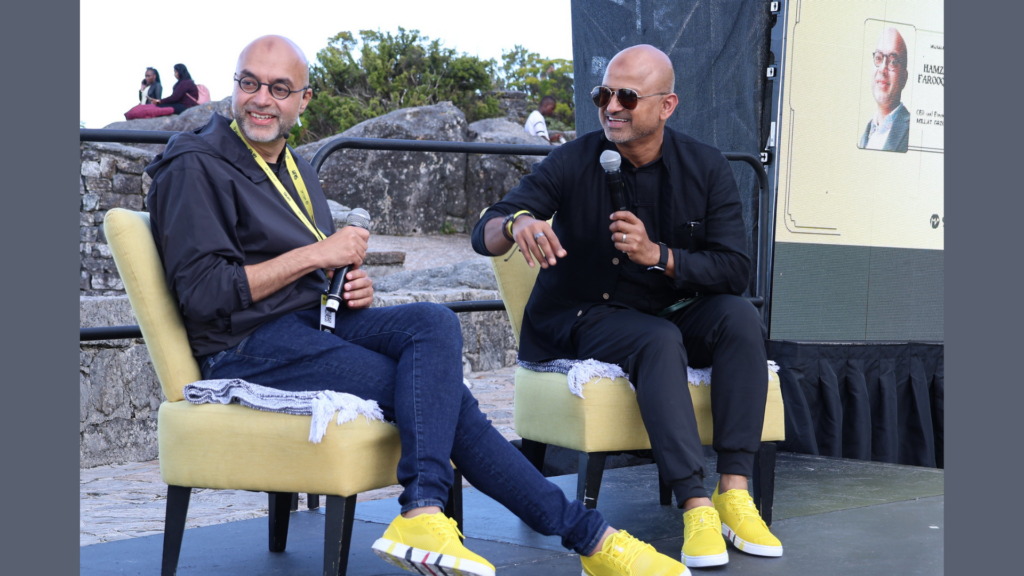
Skift Unveils 2026 Megatrends Report Atop Table Mountain, Signalling Africa’s Pivotal Moment In Global Tourism
Tourism News Africa was in attendance at Skift megatrends 2026, which took place atop Table Mountain in the beautiful Mother city, Cape Town. This was the first time an African country has hosted a Skift event and certainly set the bar high. The special Africa-themed and focused edition highlights accelerating demand, luxury travel growth, cultural tourism opportunities, and the critical need for investable infrastructure across the continent.
What was clear is that African tourism is entering a decisive phase of growth, propelled by an emerging middle class, mounting inbound arrivals, and record-high hotel development activity. These are among the key conclusions of Skift’s 2026 Megatrends report which were shared with an exclusive audience, in partnership with the Millat Group.
The exclusive gathering, the first time Skift has hosted a Megatrends event on African soil, drew leading figures from South Africa’s tourism sector against the iconic backdrop of one of the world’s most recognisable natural wonders. The report analyses how evolving traveller behaviour, capital flows, and technological advancements are redefining global travel competitiveness, offering direct implications for South Africa and other African markets aiming for sustainable, high-value tourism growth.
“Africa is often described as ‘rising,’ but I believe it is ‘now’,” said Hamza Farooqui, CEO of Millat Group. “Global travel demand is shifting towards purpose-led journeys and experiences that offer deeper meaning and connection. Travel and wellness are among the fastest-growing sectors globally, and Africa sits naturally at the intersection of both. The continent does not need to manufacture authenticity; it already exists here, rooted in nature, culture, beauty, and humanity.”
The Millat Group secured South Africa as the host for this landmark event, marking a strategic milestone for the country’s tourism and hospitality sector. Skift, founded by Rafat Ali, is the leading global travel intelligence platform, followed by CEOs, tourism ministers, airlines, investors, and luxury travel leaders worldwide. Its independent reporting, research, and invite-only forums – historically held in global capitals such as New York, London, Berlin, Singapore, Dubai, and Los Angeles – shape industry thinking on the future of travel.
The research shared, highlighted how the tourism demand for Africa is real and is constantly accelerating, but success will be determined by whether destinations can translate this demand into investable opportunities supported by reliable infrastructure, policy certainty, and long-term capital. It will take a combined effort of both governments and private sector partners throughout the continent working with common goals in mind.
Key themes highlighted in the report include:
- Luxury travel’s evolution: Africa is increasingly positioned as the next frontier for high-value, experience-led tourism that prioritises privacy, authenticity, access, and cultural depth. “Africa’s luxury advantage lies in its experiences and its stories,” Farooqui noted. “But those advantages only convert into value when supported by air access, quality operators, and investor confidence that extends beyond a single property or season.”
- Live music and cultural events: Destinations are leveraging music residencies, festivals, and creative industries to extend visitor stays, drive urban regeneration, create jobs, and broaden tourism economies.
- AI-driven marketing and discovery: Large language models are reshaping destination visibility. “How Africa’s tourism story is structured, verified, and surfaced in AI-driven systems will increasingly influence traveller choice and investment decisions,” Farooqui said.
“The 2026 Megatrends show that the next phase of global travel growth will favour destinations that are investable, well-connected, and narrative-led,” said Rafat Ali, CEO and founder of Skift. “Africa has many of the underlying demand drivers in place, particularly in experiential and luxury travel, but the winners will be those markets that align infrastructure, policy, and storytelling with how modern travellers discover and evaluate destinations.”
Across all themes, the report emphasises the need for an integrated approach to tourism development, treating it as an interconnected system spanning transport, energy, water, skills, and capital. The Millat Group sees the findings as reinforcement for coordinated public-private investment to build a resilient, globally competitive tourism economy.
“The opportunity is not simply to attract more travellers,” Farooqui concluded. “It is to build a tourism economy that is resilient, investable, and globally competitive – requiring alignment across government, investors, and operators.”
For the full list of Skift Megatrends visit: https://skift.com/megatrends/
For more industry related news, click here.
